Microneedling at Home: How It Works, What to Use, and How to Do It Safely
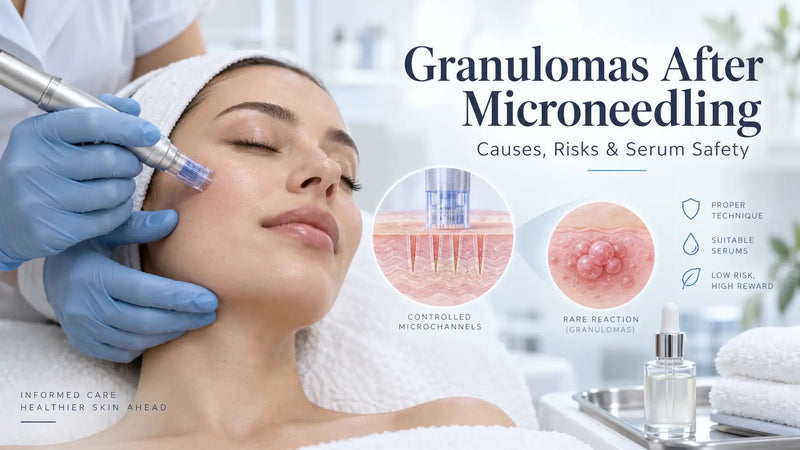
Microneedling at home is a microneedling treatment that uses a microneedling device to create very small micro channels in the skin. The goal is typically to support skin texture, hydration and overall appearance while using clean sterile single use cartridges and treatment compatible microneedling serums.
Definition: At home microneedling is the use of a professional microneedling device with sterile cartridges to create micro channels in the skin as part of a maintenance focused skincare routine.
Key Takeaway: At home microneedling should be approached conservatively. Proper hygiene, sterile single use cartridges, compatible microneedling serums, and simple aftercare are more important than aggressive needle depth or frequent treatment.
Quick Answer: How Does Microneedling at Home Work?
Microneedling at home uses a professional microneedling pen fitted with sterile cartridges to create controlled micro channels in the surface of the skin. These micro channels temporarily increase skin permeability and can make focused skincare feel more effective during and after treatment.
What Is the Difference Between At Home and Professional Microneedling?
Professional and at home microneedling use the same general principle, but they differ in treatment depth, control, environment, and purpose.
| Factor | At-Home Microneedling | Professional Microneedling |
|---|---|---|
| Treatment Depth | Superficial and conservative | Deeper and more adjustable |
| Environment | Home setting | Professional treatment setting |
| Technique | User controlled | Performed by a trained provider |
| Primary Goal | Maintenance and skin appearance | More intensive treatment goals |
| Risk Level | Depends heavily on user technique and hygiene | Managed within a professional setting |
For a more detailed comparison, see our professional vs at-home microneedling guide.
What Do You Need for Microneedling at Home?
A microneedling setup should be simple and focused on treatment hygiene, device control, and product compatibility, do not use just any plain serum for glide.
- A microneedling device designed
- New, sterile single use microneedling cartridges
- A gentle cleanser
- A lightweight microneedling serum
- Simple after care treatment skincare
Using fewer, well chosen products is generally preferable to combining multiple active skincare ingredients during a microneedling session.
What Serum Should You Use for Microneedling at Home?
Best serum for at home microneedling: A simple hyaluronic acid based serum (with or without peptides) is commonly used because it provides hydration and treatment glide without requiring a complex active ingredient profile.
Not every cosmetic serum is appropriate for microneedling. Standard serums may contain fragrance, acids, retinoids, strong antioxidants, essential oils, or other ingredients that may be poorly tolerated when the skin barrier has been temporarily disrupted.
Products used during treatment should generally be:
- Lightweight
- Hydration focused
- Fragrance free
- Microbiological testing
- PH balanced
- Low in unnecessary additives
- Compatible with freshly microneedled skin
For a deeper explanation of common serum ingredients, see our microneedling serum ingredients guide.
For hydration-focused treatment, see our hyaluronic acid microneedling serum.
Why Is Hyaluronic Acid Commonly Used During Microneedling?
Hyaluronic acid is commonly used during microneedling because it helps maintain hydration and provides slip while the device moves across the skin.
It is generally preferred as a treatment base because it is lightweight, non oily and easy to formulate into minimal ingredient serums.
Key Point: Hyaluronic acid is primarily used for hydration and glide. Peptides and other targeted ingredients may be added for specific treatment goals but they are not required for every microneedling session.
Can Peptides Be Used During At Home Microneedling?
Peptides are often included in treatment focused skincare because they are used to support concerns such as firmness, elasticity and the appearance of fine lines.
During microneedling, peptide based formulas should still be lightweight and designed with treatment compatibility in mind.
Learn more about what peptides do during microneedling.
How Should You Prepare for Microneedling at Home?
Preparation matters because microneedling temporarily increases skin sensitivity and permeability.
Before treatment:
- Start with clean skin
- Wash and dry your hands thoroughly
- Use a new sterile cartridge
- Prepare your microneedling serum before beginning
- Avoid treating visibly irritated, infected or compromised skin
- Keep the treatment area and device handling process as clean as possible
General At Home Microneedling Process
A conservative treatment generally follows a simple sequence:
- Cleanse the skin
- Prepare the device and attach a new cartridge
- Apply a thin layer of professional microneedling serum
- Work methodically across the treatment area without excessive pressure
- Reapply hydration as needed
- Finish with simple aftercare
Important: More pressure, deeper settings and repeated passes do not automatically produce better results. Over treatment mayincrease irritation and recovery time.
What Should You Avoid During At Home Microneedling?
Avoid anything that increases irritation, contamination risk or unnecessary skin trauma.
- Do not reuse cartridges
- Do not share cartridges or devices
- Do not microneedle over open wounds or actively irritated skin
- Avoid aggressive pressure or excessive passes
- Avoid highly active or fragranced serums during treatment
- Avoid treating areas that are already inflamed or compromised
What Should You Use After Microneedling?
Immediately after microneedling, the main goal is to support hydration and skin comfort while avoiding unnecessary irritation.
Simple post treatment skincare may include:
- Hyaluronic acid
- Panthenol
- Barrier-supportive moisturizers
- Gentle, fragrance free products
For step-by-step recovery guidance, see our microneedling aftercare guide.
What Should You Avoid After Microneedling?
During the initial recovery period, avoid products and activities that may increase irritation.
- Retinoids
- Strong exfoliating acids
- Harsh scrubs
- Fragrance heavy skincare
- Picking or exfoliating treated skin
- Excessive heat and sweating immediately after treatment
- Unnecessary sun exposure
How Often Should You Microneedle at Home?
There is no single frequency that is appropriate for everyone. Treatment frequency depends on device settings, treatment intensity, skin sensitivity and how quickly the skin returns to baseline.
The skin should be fully recovered before another treatment is performed.
If redness, tenderness, irritation, dryness or sensitivity is still present, another treatment should be delayed.
Is At Home Microneedling Safe?
At home microneedling can be performed more safely when treatment remains superficial and basic hygiene practices are followed consistently.
The main safety considerations are:
- Use a new cartridge for each treatment
- Do not share equipment
- Keep device handling clean
- Use conservative settings
- Avoid treating compromised skin
- Use simple, compatible skincare products
At home microneedling is not appropriate for every skin condition or every person. Anyone with an active skin infection, significant irritation or uncertainty about whether microneedling is appropriate should seek guidance from a qualified healthcare or skincare professional.
Who Should Avoid At Home Microneedling?
At home microneedling should generally be avoided when the skin is actively inflamed, infected, or unable to heal normally.
Examples include:
- Active skin infections
- Open wounds
- Severe irritation
- Active inflammatory skin conditions in the treatment area
- Recent procedures that have not fully healed
If you are unsure whether microneedling is appropriate for your skin, seek professional guidance before treatment.
What Makes a Good At Home Microneedling Routine?
A good routine is simple, repeatable and easy to perform hygienically.
The most important elements are:
- Consistent hygiene
- Sterile Single use cartridges
- Conservative treatment technique
- Compatible professional microneedling serum
- Simple aftercare
- Enough recovery time between treatments
Key Takeaway: The quality of an at home microneedling routine depends more on consistency and proper technique than on using aggressive settings or complicated skincare combinations.
At Home Microneedling Frequently Asked Questions
Does microneedling at home really work?
At home microneedling is generally used as a superficial maintenance focused treatment. Results vary based on device settings, skin condition, technique, consistency and the products used during and after treatment.
Can I use hyaluronic acid while microneedling?
Yes. Hyaluronic acid is one of the most commonly used ingredients during microneedling because it provides hydration and treatment glide. The formulation should still be appropriate for freshly microneedled skin.
Can I use any hyaluronic acid serum for microneedling?
No. A standard cosmetic hyaluronic acid serum may contain fragrance, strong actives or other ingredients that are not ideal for use during microneedling. A simpler treatment compatible formulation is generally preferred.
Can I use vitamin C during microneedling?
Strong vitamin C formulas may be irritating when used on freshly microneedled skin. A simpler hydration focused routine is generally preferred immediately during and after treatment.
Can I use retinol after microneedling?
Retinoids are commonly avoided immediately after microneedling because freshly treated skin may be more sensitive. Resume stronger active ingredients only after the skin has recovered.
Should I reuse microneedling cartridges?
No. Microneedling cartridges should be treated as single use items and replaced for each treatment.
Can I microneedle active acne?
Microneedling directly over active inflamed or infected lesions should generally be avoided because it may increase irritation and contamination risk.
How long does redness last after microneedling?
Recovery varies depending on treatment intensity and individual skin sensitivity. Mild redness may resolve relatively quickly, while more intensive treatments can require a longer recovery period.
What is the most important product to use during microneedling?
A professional microneedling serum that provides hydration and glide is usually the most important product used during the procedure. Hyaluronic acid is commonly used for this purpose.
Summary: Microneedling at Home
At home microneedling is a skincare procedure that should prioritize conservative technique, clean Sterile single use cartridges, treatment compatible serum, and proper recovery.
Hyaluronic acid is commonly used during treatment because it supports hydration and glide, while simple aftercare helps minimize unnecessary irritation during recovery.
For additional guidance, explore:
- Professional vs At-Home Microneedling
- Microneedling Aftercare
- Microneedling Serum Ingredients
- Peptides During Microneedling
Explore Microneedling Products
If you are building an at home routine, you can compare our microneedling kits, browse microneedling serums, or learn more about our hyaluronic acid microneedling serum.