High Molecular Weight Hyaluronic Acid for Microneedling: Why Glide Matters
Not all hyaluronic acid is created equal, especially when it comes to professional microneedling.
While hyaluronic acid is widely recognized for its hydration properties, its molecular weight plays another important role during professional skin treatments: how smoothly a microneedling device moves across the skin.
For practitioners seeking a glide focused formulation, Hyaluronic Acid Microneedling Serum is designed with high molecular weight hyaluronic acid to support smooth, controlled application during professional treatments.
High molecular weight hyaluronic acid (HMW-HA) is particularly valuable when the primary objective is providing consistent treatment glide. Its unique molecular structure contributes to the viscosity, surface lubrication and smooth glide characteristics desirable in a professional treatment medium.
But what happens when the goal goes beyond glide? That's where multi-molecular weight hyaluronic acid formulations become worth exploring.
Understanding the difference helps practitioners distinguish between a serum designed primarily for glide and one formulated to combine glide with additional treatment objectives.
Why High Molecular Weight Hyaluronic Acid Is Ideal for Microneedling Glide
During microneedling, a treatment medium is often used to help the device move smoothly across the skin.
A properly formulated glide serum should provide enough slip to support consistent movement without becoming excessively sticky, heavy or difficult to control.
High molecular weight hyaluronic acid is particularly well suited to this formulation objective because of its long molecular chains, larger molecules and viscoelastic properties.
1. Longer Molecular Chains Create Viscosity
High molecular weight hyaluronic acid consists of long polymer chains that interact with water and depending on their concentration, with one another.
These interactions contribute to the viscosity and texture of an HA solution.
Compared with lower molecular weight HA, higher molecular weights can produce substantially greater viscosity at comparable concentrations.
For microneedling, this gives formulators an effective way to create a treatment medium with the body and consistency needed for smooth application.
2. Viscoelastic Properties Support Smooth Movement
One of the most valuable characteristics of high molecular weight HA is its viscoelastic behavior.
Viscoelasticity describes a material that exhibits both liquid like flow and elastic properties.
HA solutions can also demonstrate shear thinning behavior, meaning their apparent viscosity decreases as they are subjected to movement.
In a well balanced microneedling formulation, this can help create a serum that maintains its consistency when stationary while spreading more easily during treatment.
The result can be a smooth, controlled application experience.
Importantly, viscosity alone does not determine glide. A formulation must also be evaluated for friction, tackiness and how it behaves against the skin and treatment device.
3. Surface Hydration Contributes to Treatment Slip
High molecular weight hyaluronic acid has excellent water binding properties.
Its ability to retain water and contribute to a hydrated surface film makes it particularly useful in formulations where surface lubrication is the primary objective, such as microneedling.
For practitioners, the goal is to select an HA molecule that does not penetrate as deeply as possible but remain active on the surface of the skin.
The priority is creating a consistent, comfortable working surface that allows the microneedling device to move effectively throughout the treatment.
When glide is the primary consideration, high molecular weight HA provides a compelling foundation for a professional microneedling formula.
Does Higher Molecular Weight Always Mean Better Glide?
Higher molecular weights can substantially increase viscosity, however an effective glide serum requires more than simply selecting the highest available molecular weight.
Formulators must balance:
-
Hyaluronic acid molecular weight
-
Ingredient concentration
-
Ingredients made for microneedling
-
Surface lubrication
-
Compatibility with the intended procedure
The ideal treatment medium should offer enough slip for smooth device movement while remaining easy to control.
High Molecular Weight vs. Multi Molecular Weight Hyaluronic Acid for Microneedling
High molecular weight HA and multi-molecular weight HA formulations can serve different purposes in professional microneedling.
A formula centered on HMW-HA may be developed primarily for glide, lubrication and surface hydration.
A multi-molecular weight formulation combines HA molecules of different sizes, offering different hydration and transport characteristics.
The distinction lies in the intended function of the finished product.
| Formulation characteristic | HMW-HA-focused serum | Multi-weight HA serum |
|---|---|---|
| Main formulation emphasis | Glide and surface lubrication | Combined hydration and formulation functions |
| Viscosity contribution | Often substantial | Depends on molecular weight blend |
| Surface hydration | Strong formulation | Can include surface hydration |
| Molecular size diversity | Primarily larger HA molecules | Larger and smaller HA molecules |
| Use with other actives | Possible with appropriate formulation | Desired for multi penetration |
| Suitability during microneedling | YES | Requires finished-product evaluation |
Neither formulation is automatically suitable for microneedling simply because it contains hyaluronic acid, choosing a Hyaluronic Acid Microneedling serum developed specifically for the procedure.
When Would Multi Molecular Weight Hyaluronic Acid Be Beneficial?
Multi molecular weight hyaluronic acid becomes particularly interesting when a formulation is designed to accomplish more than provide device glide.
Combining HA molecules of different sizes gives formulators opportunities to adjust texture, hydration characteristics and how ingredients behave within a finished product.
Understanding Different Molecular Weights and Skin Penetration
In conventional topical skincare, smaller HA molecules can penetrate the skin more readily than larger molecules, while HMW HA primarily supports surface hydration.
Microneedling changes the equation.
The procedure creates temporary microchannels that alter the skin's normal barrier function. This can affect how substances encounter and move through the skin.
However, molecular weight alone does not determine how deeply HA travels during microneedling.
The actual distribution of ingredients depends on multiple factors, including the treatment method, needle depth, molecular size, concentration, formulation properties and timing of application.
Combining HA With Additional Active Ingredients
Some professional treatment serums are designed to include ingredients beyond hyaluronic acid.
Examples may include peptides, exsomes, or other cosmetic actives.
In these formulations, combining multiple HA molecular weights may help manufacturers develop a desired texture and hydration profile while incorporating complementary ingredients.
Multi weight HA may be advantageous when a formulation has broader treatment objectives, but it is not inherently superior to HMW-HA for glide alone.
Why Ingredient Simplicity Matters During Microneedling
Microneedling differs from ordinary topical skincare because the procedure temporarily disrupts the skin barrier.
This makes ingredient selection especially important.
When glide is the principal objective, there may be little reason to introduce additional active ingredients that do not serve a clearly defined purpose.
A focused formulation can make it easier for practitioners to evaluate what is being applied during treatment.
However, simplicity should not be confused with an automatic guarantee of safety.
The complete formulation, microbial quality, impurities, testing and intended use all matter.
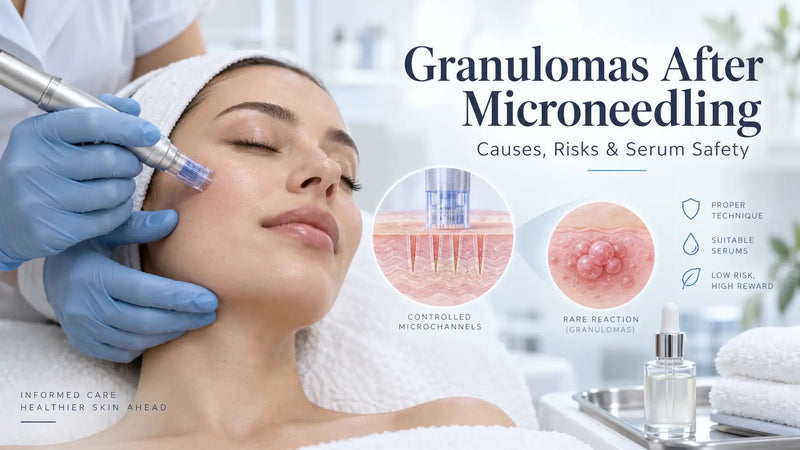
Published dermatology case reports have documented rare granulomatous reactions following microneedling with certain topical cosmetic products. These reports reinforce the importance of carefully evaluating products used on skin undergoing barrier disruption.
Neither high molecular weight HA nor sterility alone eliminates the possibility of an adverse reaction.
For a closer examination of these complications, read our guide: Granulomas After Microneedling: Causes, Reported Cases, and What Professionals Should Know.
Choosing a Hyaluronic Acid Formulation Based on Treatment Goals
The best formulation is not necessarily the one containing the greatest number of molecular weights or active ingredients.
It is the one appropriately designed and evaluated for its intended purpose.
When treatment glide is the primary objective:
A high molecular weight HA focused formula is a logical choice because of its water binding, viscosity and viscoelastic characteristics.
When a formulation has broader objectives:
A multi-molecular weight HA blend provides additional opportunities to adjust hydration and texture, particularly when combined with other carefully selected active ingredients.
In either case, professional use requires an evaluation of the finished product rather than relying solely on its ingredient claims.
For professionals exploring a glide focused formula, this Professional Hyaluronic Acid Microneedling Serum product page provides further information about its ingredients, formulation and available testing.
Frequently Asked Questions
Why is high molecular weight hyaluronic acid preferred for microneedling glide?
High molecular weight HA can produce the viscosity and viscoelastic properties desirable in glide focused formulations. Its water binding properties also contribute to surface hydration and lubrication.
Is high molecular weight HA better than low molecular weight HA for microneedling?
When glide is the primary objective, HMW-HA is considered the proper selection as Lower molecular weight HA serves several purposes, but neither type is universally superior in every finished treatment product.
Does multi-molecular-weight HA penetrate different skin depths?
Different molecular weights have different penetration characteristics, but microneedling delivery is influenced by more than molecular size.
Can multi weight HA be combined with peptides or other actives?
Yes, different molecular weights can be incorporated into formulations containing other ingredients. However, each active ingredient and the complete formulation should be evaluated for compatibility, stability and suitability for the intended microneedling procedure.
Is a thicker HA serum always better for microneedling?
No. Excessive thickness can create drag or tackiness. A successful treatment medium needs a balance of viscosity, lubrication, spreadability and control.
Final Thoughts: Match the Molecular Weight to the Purpose
High molecular weight hyaluronic acid has a distinct advantage as a starting point for professional microneedling formulations where glide is the primary consideration.
Its long molecular chains, water binding properties, and viscoelastic behavior allow formulators to develop treatment media focused on smooth, controlled application.
Multi molecular-weight HA blends offer different possibilities, particularly when developing more complex formulas that combine hydration with additional ingredients.
Ultimately, the goal is not to include as many molecular weights as possible. It is to choose a formulation designed for the function it needs to perform.
For glide focused microneedling, HMW-HA is a strong foundation. For broader formulation objectives, multi-weight HA may offer additional flexibility.